
When it comes to plumbing systems, choosing the right fitting material is just as important as choosing the right product.
From stainless steel and brass to bronze and carbon steel, each material has its own advantages, limitations, and ideal applications. Factors like water quality, corrosion resistance, temperature, pressure, and installation environment can all influence how a fitting performs over time.
But with so many materials available, how do you know which one is right for the job?
We're breaking down the differences between common plumbing fitting materials, explaining important technical considerations, and answering frequently asked questions to help make material selection easier to understand.
Understanding Common Plumbing Fitting Materials
Before choosing a fitting, it's helpful to understand what makes each material different.
Stainless Steel
Stainless steel is known for its strength, durability, and corrosion resistance.
Unlike standard carbon steel, stainless steel contains at least 10.5% chromium. This chromium reacts with oxygen to form a thin, protective layer on the metal's surface that helps prevent rust and corrosion.
Two of the most common grades are 304 and 316 stainless steel.
304 Stainless Steel
304 stainless steel provides good corrosion resistance and is commonly used in a variety of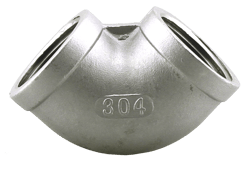 plumbing and water system applications.
Unlike yellow brass, stainless steel can be used in underground installations, although additional protection is required to prevent corrosion caused by aggressive soil conditions.
316 Stainless Steel
316 stainless steel offers many of the same benefits as 304 but has an advantage in corrosion resistance, strength, welding, and heat resistance.
The main difference is the addition of 2% to 3% molybdenum, which significantly improves corrosion resistance.
This makes 316 stainless steel particularly well suited for applications involving chlorides. 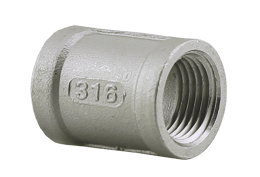
Both grades offer good corrosion resistance, but the specific application and operating conditions should determine which grade is selected.
Brass
Brass is a copper-based alloy commonly used in plumbing fittings and valves.
However, not all brass alloys have the same composition or corrosion resistance.
Yellow brasses, which contains more than 15% zinc, are susceptible to a form of corrosion called dezincification.
This makes yellow brass unsuitable for direct burial and less desirable in aggressive water conditions.
Bronze
Bronze is another copper-based alloy used in plumbing applications.
While brass is generally made from copper and zinc, bronze is primarily made from copper and tin, although it can contain other elements.
Bronze is often preferred in applications where greater resistance to dezincification is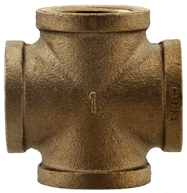 required.
For example, Boshart uses no-lead bronze alloys in products such as pitless adapters and insert adapters.
There are more than 400 different copper and copper-alloy compositions, so knowing the exact alloy is important when comparing materials.
What Is Dezincification, and Why Does It Matter?
One of the most important factors when selecting brass fittings is understanding dezincification.
Dezincification is a form of corrosion that occurs when zinc dissolves out of a brass alloy in an aqueous solution.
As zinc is removed, it leaves behind a porous, copper-rich structure with reduced 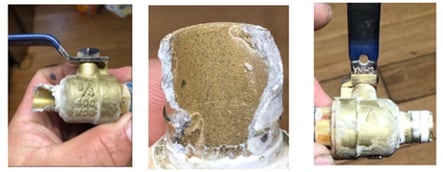 mechanical strength.
In simpler terms, the fitting can become weaker over time.
Brass alloys containing more than 15% zinc, commonly known as yellow brass, are particularly susceptible to dezincification.
This is one reason yellow brass is not suitable for direct burial.
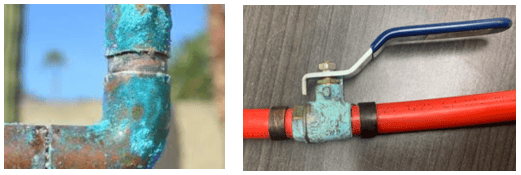
Why Do Brass Ball Valves Turn Green?
Have you ever noticed a green, crusty, or powdery buildup on a brass ball valve or copper pipe?
This is called verdigris.
Verdigris is a greenish-blue coating, also known as patina, that forms when the copper in brass oxidizes due to exposure to moisture, air, and sometimes acidic conditions.
It is part of the natural oxidation process of copper.
However, it's important not to confuse this with dezincification.
While dezincification weakens the brass by removing zinc from the alloy, verdigris is caused by the oxidation of copper and is generally less serious.
Exposure to moisture and corrosive elements can accelerate this process.
Protective coatings, regular cleaning, and proper storage can help maintain the appearance and performance of brass fittings.
Can Stainless Steel and Brass or Bronze Fittings Be Connected?
Yes! Stainless steel can be connected directly to brass, bronze, or copper fittings.
When two different metals are connected, there is a possibility of galvanic corrosion.
However, the risk of galvanic corrosion between stainless steel and brass or copper is generally insignificant because the alloys are relatively close.
These material combinations have been used successfully in plumbing and water systems for many years.
Some common examples include:
1. Brass Valves and Galvanized Pipe
Brass gate valves and ball valves are commonly connected directly to galvanized piping.
2. Frost-Free Yard Hydrants
Traditional frost-free yard hydrants often combine brass or bronze valve bodies with galvanized standpipes.
Boshart has also developed the YHSS series yard hydrant, which features a 304 stainless steel valve body, standpipe, connecting rod, and coupling for a higher level of corrosion resistance.
3. Push-Fit Fittings
Boshart push-fit fittings use a stainless steel gripper ring that comes into direct contact with copper pipe.
Although the gripper ring does not directly contact the water, it can be exposed to moisture caused by condensation inside the fitting when cold water flows through the piping.
4. Submersible Pumps
Submersible pump manufacturers have used stainless steel tubing with brass or bronze end fittings for many years without notable corrosion problems.
Although the risk of galvanic corrosion is minimal in these examples, avoiding direct connections between dissimilar metals whenever possible remains best practice.
Which Plumbing Materials Are Suitable for Underground Installation?
Underground installations expose fittings to soil conditions that may accelerate corrosion.
This makes material selection and proper installation especially important.
Yellow Brass
Brass alloys containing more than 15% zinc are susceptible to dezincification and are not suitable for direct burial.
Bronze and Red Brass
These materials offer greater resistance to dezincification and are preferred over yellow brass in underground applications.
304 Stainless Steel
304 stainless steel is a much better choice than brass for underground installations because of its corrosion resistance.
However, stainless steel can still be affected by aggressive soil conditions.
For this reason, 304 stainless steel components must be wrapped with silicone pipe wrap when installed underground to protect against accelerated corrosion caused by the soil.
Failure to wrap the fitting in an underground application will void the warranty if the failure is soil-related.
Which Metal Is Best for Hard Water Applications?
Hard water contains dissolved minerals, particularly calcium and magnesium.
Over time, these minerals can contribute to buildup inside plumbing components, potentially reducing water flow and affecting performance.
Different fitting materials respond differently to these conditions.
Stainless Steel Fittings
Stainless steel is less prone to corrosion and mineral deposits that can accumulate and restrict water flow.
It is also less likely to crack in freezing environments.
Although stainless steel fittings may have a higher upfront cost, their greater longevity and potential warranty benefits can make them a worthwhile long-term investment.
Brass Fittings
Hard water can penetrate protective coatings and contribute to corrosion in brass fixtures.
Mineral deposits can also reduce water flow and potentially damage seals and washers.
Over time, brass fittings may develop a chalky layer of limescale mixed with a green patina, changing their appearance.
For applications involving hard water, stainless steel may offer advantages in corrosion resistance, durability, and long-term performance.
How to Choose the Right Plumbing Fitting Material
Choosing the right material depends on the conditions the fitting will be exposed to and the requirements of the system.
Here are a few important factors to consider.
1. Water Quality
Hard water, chlorides, and aggressive water conditions can affect how different metals perform.
Understanding the water conditions can help determine which materials offer suitable corrosion resistance.
2. Installation Environment
Fittings installed underground may require different materials and protective measures than fittings installed in standard plumbing systems.
3. Corrosion Resistance
Some materials, such as stainless steel and bronze, offer greater resistance to certain forms of corrosion than yellow brass or carbon steel.
4. Pressure and Temperature Requirements
The operating conditions of a system can influence whether light or heavy pattern fittings are appropriate.
5. Material Compatibility
When connecting different metals, consider the possibility of galvanic corrosion and whether the materials are suitable for direct contact.
6. Long-Term Durability
While some materials may have a higher initial cost, their corrosion resistance, strength, and longevity can provide value over time.
The Bottom Line
There is no single fitting material that is ideal for every application.
Stainless steel, brass, bronze, and carbon steel each offer different advantages depending on the environment, water conditions, and system requirements.
Understanding these differences makes it easier to select the appropriate material and recognize why certain fittings are better suited for specific applications.
Have further questions about this subject?

Head over to Boshart's Knowledge Base: technical product information, guidelines, and more.
SHARE